Designing a Four-Season Lake Home for Michigan Winters and Summer Charm
Northern Michigan doesn't do half measures when it comes to seasons. Summers bring warm water and long days on the boat, while winters bring real snow, real cold, and a kind of quiet beauty that's just as much a part of lake life as July afternoons on the dock. A lake home that's only built for summer misses half of what makes this region special — and increasingly, families want a home that performs just as well in February as it does in August.
Why Four-Season Design Matters in Northern Michigan
More families are using their lake homes year-round rather than closing them up after Labor Day. Some are working remotely and splitting time between the lake and the city. Others simply want to experience the area's dramatic seasonal shifts firsthand — something we explored in our post on
Grand Traverse Bay through the seasons, where the bay transforms almost completely from summer to winter. Whatever the reason, a true four-season home needs to be built differently than a home meant only for warm-weather visits.
Building for Real Michigan Winters
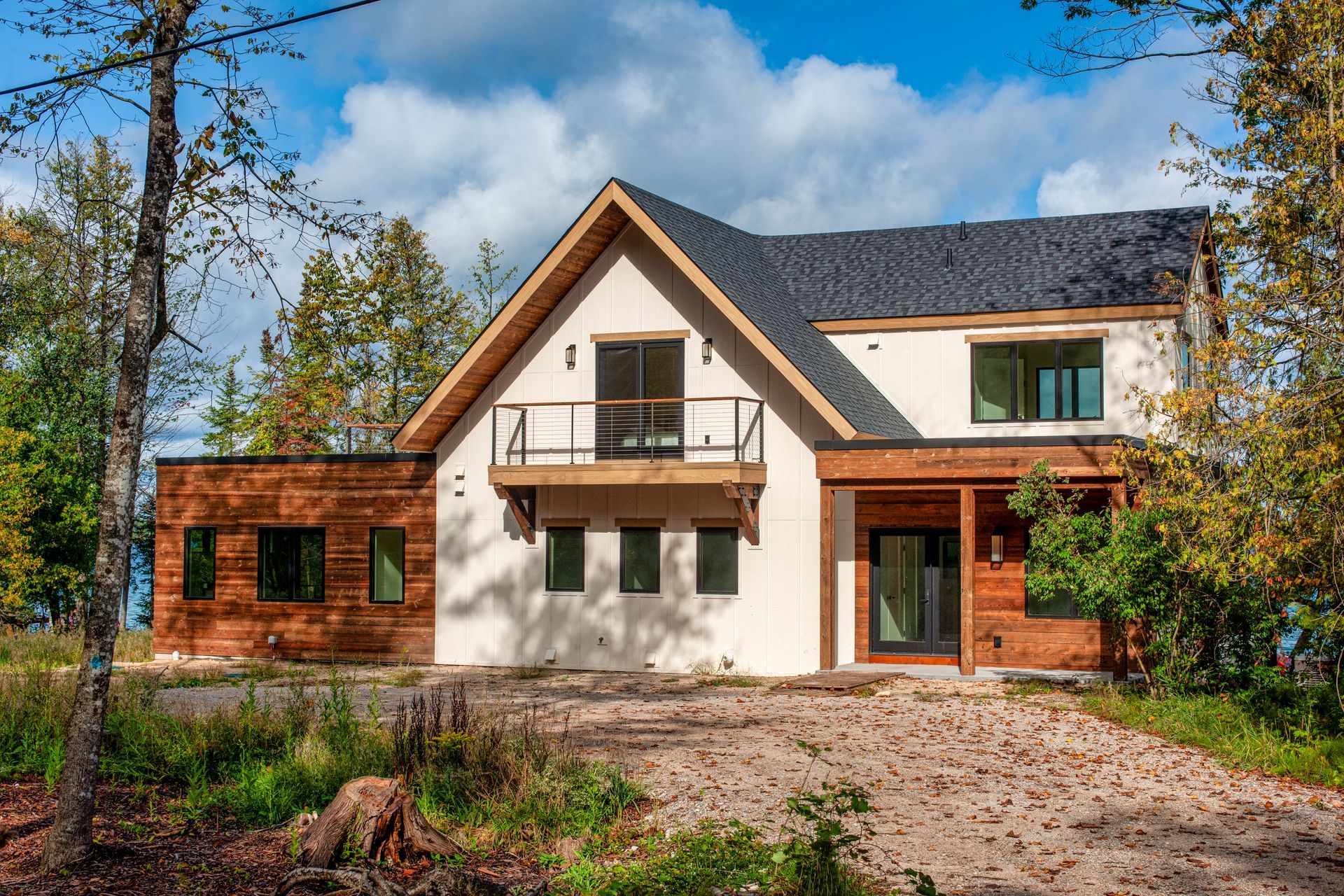
Northern Michigan winters bring significant snow loads, sustained cold, and freeze-thaw cycles that put real stress on a building's structure and systems. Four-season design starts with the fundamentals: properly engineered roof pitches that shed snow rather than collecting dangerous loads, foundations designed to handle frost heave, and exterior materials that can withstand repeated freezing and thawing without deteriorating. None of this is glamorous, but it's the foundation everything else is built on.
Keeping Summer Charm Without Sacrificing Winter Performance
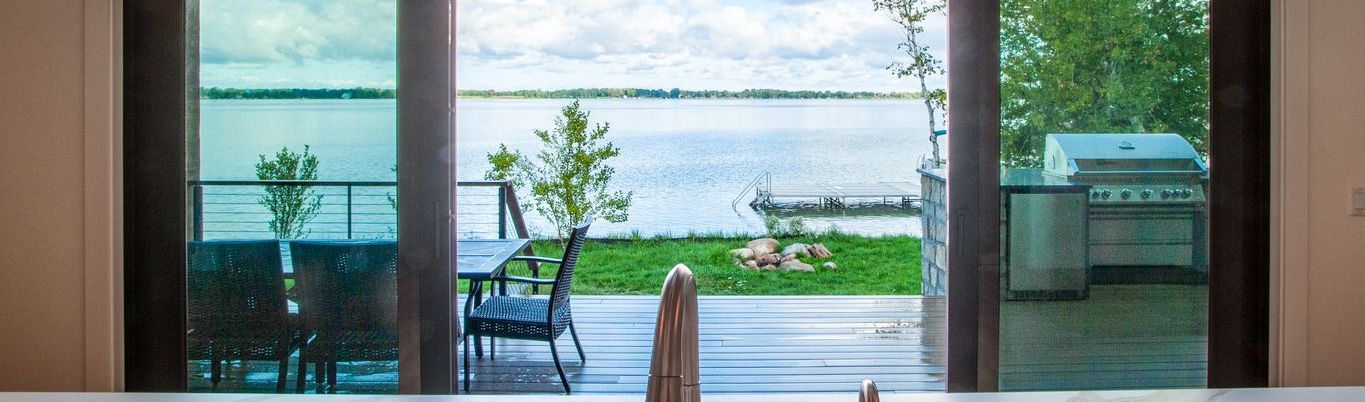
The challenge with four-season design is balance. Families don't want a home that feels like a bunker just because it needs to survive winter — they still want the open, breezy, water-facing feel that makes a lake house feel like a lake house in July. The best four-season designs achieve this with high-performance materials that don't compromise on style: triple-pane windows that still deliver expansive views, durable but warm-toned exterior siding, and covered outdoor spaces that work as a screened porch in summer and a wind-protected retreat in winter.
Heating, Insulation & Energy Efficiency
A home that's comfortable in January without an enormous heating bill comes down to what's happening inside the walls. High-performance insulation, properly sealed building envelopes, and efficient heating systems — radiant floor heat is a popular choice in lake homes for the way it keeps tile and stone floors comfortable underfoot — all make a meaningful difference. These upgrades matter just as much in a
lake home addition as they do in new construction, since an addition is only as comfortable as the systems supporting it.
Outdoor Living That Works Year-Round
A four-season lake home extends its livable space outdoors, even in winter. Covered patios with outdoor fireplaces or heaters turn a porch into a place to watch snow fall over the water rather than a space that's closed off from October through April. Mudrooms built to handle wet boots and snow gear are just as essential in the winter as they are for swimsuits and sandy feet in the summer.
Designing for Natural Light in Every Season
Michigan winters bring shorter days, which makes natural light even more valuable in the colder months. The same window and orientation strategies we covered in our piece on maximizing views and natural light become especially important for a four-season home — a well-placed window wall that frames a summer sunset over the water does double duty in winter, filling the home with light during the shortest days of the year.
Where Four-Season Design Comes Together
We've built and renovated four-season homes for families on lakes throughout the area, including near Birch Lake and Torch Lake Township, where year-round living has become increasingly common over the past several years. In every case, the goal is the same: a home that feels just as warm and welcoming during a quiet snowy weekend as it does during a packed summer holiday.
Frequently Asked Questions
What makes a lake home suitable for year-round living in Michigan?
A true four-season lake home requires properly engineered roofing and foundations for snow and frost, high-performance insulation and windows, efficient heating systems, and outdoor living spaces designed to be usable even in colder months.
Do four-season homes cost more to build than seasonal lake homes?
Generally, yes, since four-season homes require more robust structural engineering, higher-performance insulation, and heating systems built to handle sustained winter use, but the investment often pays off through year-round usability and lower long-term energy costs.
Can an existing seasonal cottage be converted into a four-season home?
In many cases, yes. This typically involves upgrading insulation, replacing windows, improving the heating system, and reinforcing the structure to handle winter snow loads, often as part of a larger renovation or addition.
What heating systems work best in a Northern Michigan lake home?
Radiant floor heating is a popular choice for keeping tile and stone floors comfortable, often paired with a forced-air or zoned heating system to handle the home as a whole, depending on the layout and size.
Can I still have large windows and an open floor plan in a four-season home?
Yes. High-performance, triple-pane windows allow for expansive views and natural light without sacrificing energy efficiency, which is especially valuable during Michigan's shorter winter days.